
Why a letter from a made-up character can work as well as a real pen pal
Full disclosure: we make the thing this post is about, so we're biased. But our five-year-old test subjects don't care about our conflict of interest, they just want to know when Gina's next letter shows up. Turns out there's actual research on why that works, not just why it's cute.
Olena Mazur · July 15, 2026
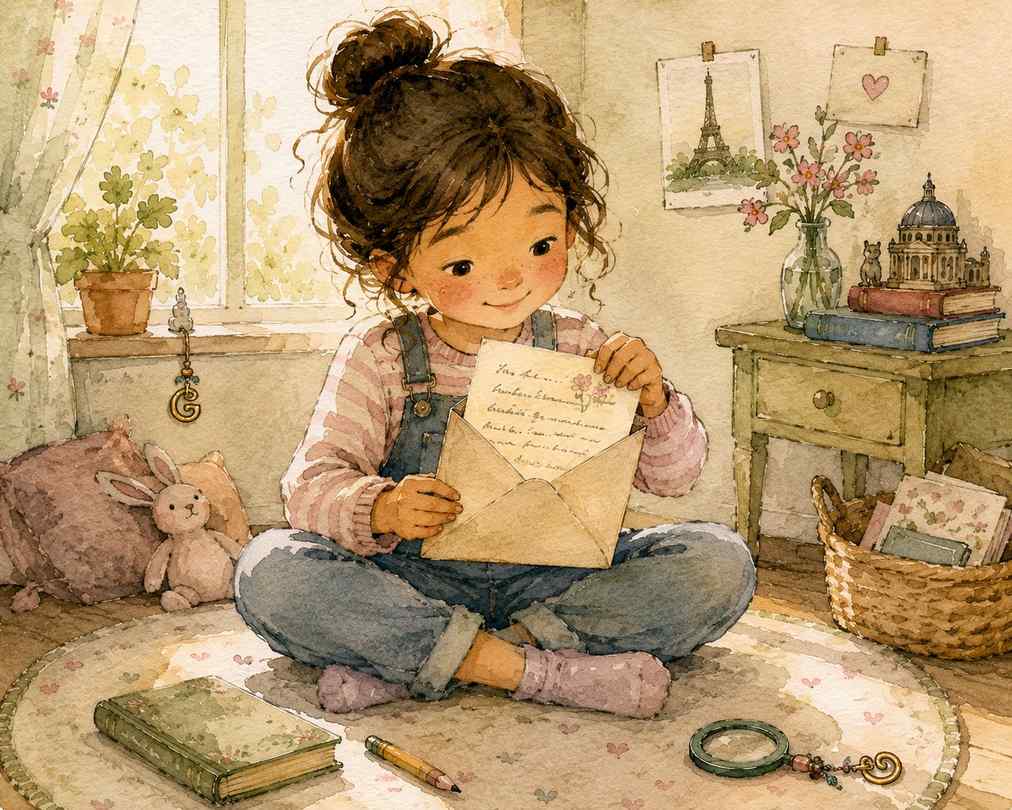
Even though we are not a neutral party here, I tried to root this article in research and personal experience, not just marketing speak.
Kids today are surrounded by fictional characters - from the moment a tablet turns on with a YouTube explain video about sumo fighters to the next Bluey (we love Bluey in this household, but still...) episode. A fictional pen pal isn't introducing kids to some new concept: whether a character shows up on a screen or in an envelope, it's imaginary either way. What a fictional pen pal adds is the waiting, the physical letter that a child can hold on to, and the added bonus of trying to read something fun and written just for them. Now, that's the part an app or a streaming service was never built for.
What is a fictional pen pal?
Often, it is a made-up character who sends real letters to a real child in the real mail. This means that the anticipation, the reading practice, and the excitement of checking the mailbox are there too. There's no actual person on the receiving end, which means no stranger has access to your child, and no vetting required.
A fictional pen pal is a mail-based version of something most kids are already doing constantly: playing pretend with a character who feels like a friend. Up to 65% of children develop some kind of imaginary friend before age seven, according to research summarized by psychiatrist Dr. Eleanor Lastrapes of the University of Oklahoma Health Sciences Center in a 2026 Care.com piece on the topic. That's the majority of kids, not the exception. In our household, we had Tippy, Jim, and now Polka Dot (yes, that's a name, lol).
Are imaginary friends good or bad for child development?
The short answer is yes, they are good for your kids. When my daughter first came up with one, I was worried. I do not remember having one as a kid myself, so (naturally) I googled.
Having an imaginary friend is one of the better-studied sides of child psychology. University of Oregon psychologist Marjorie Taylor showed that children with imaginary friends scored higher on tests of emotional understanding and theory of mind (the ability to grasp that other people think differently than you do) than kids without one. A separate WebMD explainer as recent as January 2026 notes such children also tend to be more articulate and score higher on creativity.
Most kids understand that it's pretend the whole time, yet they still get the emotional benefit. That distinction matters for a letter-based version of the concept too: your child doesn't need to be tricked into believing that the penpal is real for it to work. But if they do believe, this should not alarm you as parents, either.
Why kids form real feelings for a made-up character
This is due to something called a parasocial relationship - a one-sided emotional bond a child forms with a character present in their life, even though the connection usually runs only one way (Dashi from Octonauts, Bluey, and Miguel from Coco are ours. Which are yours?). Georgetown University's Children's Digital Media Center has shown that kids learn academic concepts, like early math or geography, faster and more effectively from characters they feel bonded to. The stronger the bond, the more a child pays attention and retains.
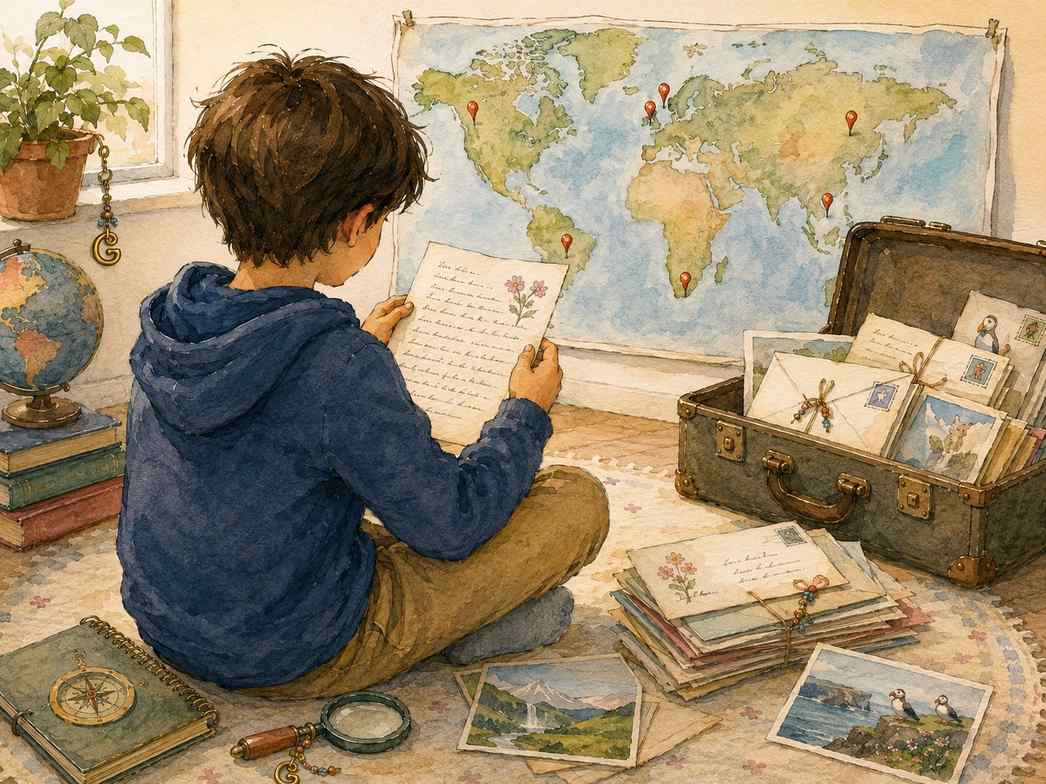
A letter is a slower version of that same bond. A YouTube character talks at a child for 10-20 minutes and moves on. A pen pal writes to your child, telling a story in vivid detail with drawings and fun anecdotes.
Is it safe for a kid to have a pen pal?
If it's a fictional pen pal from a vetted company, yes - 100%. The safety question applies to actual pen pals. If you are thinking of signing up your child for any program that pairs a child with a stranger, even by mail, it is worth a few minutes of research. Of course, this does not apply to having grandparents and cousins write to your kid!
There are safety nets about having your kid write to and receive letters from an actual person. A few of those are:
- Applications and matching pen pals through supervised channels.
- Keeping correspondence age-grouped.
- Recommendations that children use first names only and avoid sharing addresses or school names.
- Having a parent low-key review letters before anything is exchanged.
By no means are we trying to say that having a real pen pal is unsafe, but it does require some degree of vigilance and time to make sure a person your kid is getting letters from (and writing to) is just another child like themselves.
A fictional pen pal, like Gina, sidesteps the entire safety issue. We do not want to knock the pen pal programs down, but having a fictional friend who writes you letters about their adventure is a tad different, lower-friction way to get a similar payoff for younger kids especially.
What do parents have to say about this
On forums like Reddit or Quora, parents discuss this often.
For example, in this Quora thread asking whether parents should play along with an imaginary friend or tell their child it isn't real, one parent's answer was this: kids already live in an imaginary world adults have lost access to, so there's no reason to rush them out of it. School and peers will eventually do it; your job is to be there to pick up the pieces.
Does my child need to believe the character is real for this to work?
No, and most kids won't. It's the same as a kid with an imaginary friend knowing perfectly well it's pretend. What matters more is that they're engaged, not sold on an idea that the person writing to them is real. My daughter sees me working on Gina's Letters all the time - she hears me arguing with the designer about the layout, discussing with the ECD specialist how we explain certain things in the letter, and on phone calls with mailing providers about delivery terms. And yet, she still asks me when the next letter will arrive and what it will be about. She knows her mom has made Gina up, but she reads Gina's letter anyway, trying to guess where Gina will travel next month or answering the quiz at the end of each letter. This is the most beautiful and precious thing about a child's imagination.
Letters (from Gina, in our case) build patience, give them something to look forward to, a character worth following, and a new place on our planet to learn about. None of it requires belief that the character is real, but it does require a good story told right.
What age is a fictional pen pal best for?
Somewhere between 4-9 years is the sweetest spot, which aligns with when imaginary companionships typically peak and start to taper off (usually by age 9-10). It also overlaps with the age range where kids are starting to get curious about handwriting and reading on their own. So a letter gives them a reason to practice both without it feeling like homework.
How to introduce a kid to a fictional pen pal
Let the first letter show up as a surprise rather than a big announcement. Don't over-explain who the character is before it arrives; let your child ask the questions once they're holding something tangible addressed to them. And let them maybe come up with an explanation of who the character is on their own. Maybe they will see themselves in the character, maybe they will see one of their friends, or maybe they will imagine a completely new vivid person. Let their imagination do the work.
A few things listed below that tend to work well and are worth considering:
- Read the first letter together, out loud, and let your child's questions drive the conversation instead of pre-loading backstory.
- Keep the mailbox check very low-key, so that the waiting does not turn into pressure instead of anticipation.
- Let your child keep the letters somewhere of their own (even if they stain or tear some), a box or a drawer, so the physical object stays part of the ritual.
It's important to remember that a fictional pen pal isn't a replacement for real friendships, any more than a favorite stuffed animal replaces a parent. Treat it as a small, safe, low-stakes way for a kid to practice something their brains are already wired to do: get a little braver, a little more patient, and a little more curious.